
Short answer
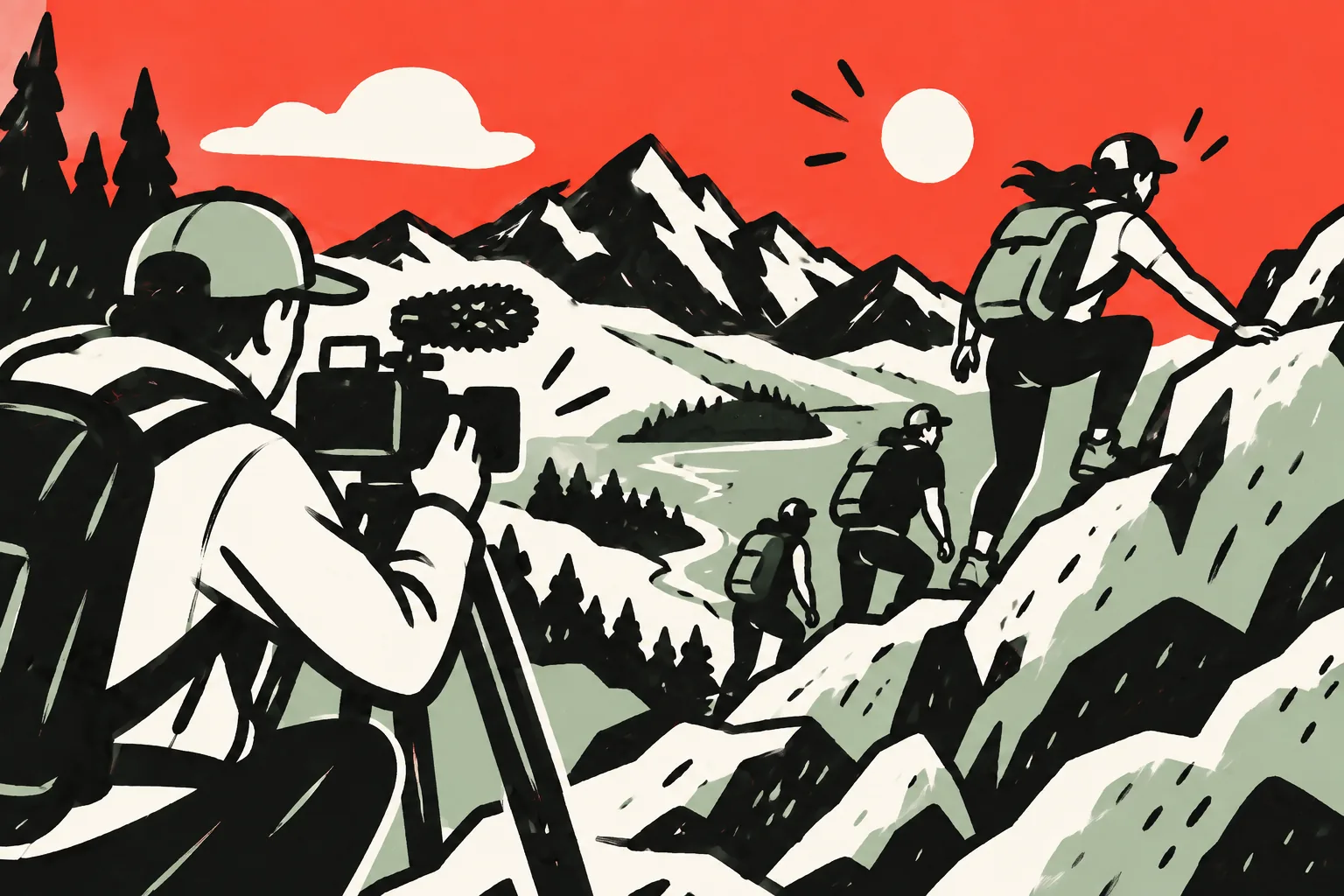
An effective outdoor production shows the relationship between people, gesture and environment. The landscape establishes the context, but technique, effort, collaboration and preparation make the experience specific. Planning, safety and knowledge of the terrain come before the camera. Production must also plan for real-world uses of assets, without requiring every scene to work in every format.
01
What do you prepare before going out?
Route, weather, light, access, communications and exit routes determine times and equipment. The recovery plan must remain contingent on the safety of the group.
Roles and signals between production and guides avoid interference. Each person involved must know the use of the images and the level of exposure required.
02
Which scenes make the experience credible?
Preparation, briefing, waiting and mutual help show the character of the project. The culminating gesture alone can make the activity seem more extreme or simple than it is.
Alternating wide shot, relationship and detail builds useful sequences. The camera movement follows the meaning of the scene, not a dynamic formula.
03
How do you deliver usable assets?
Selection and editing must produce main formats and possibilities for adaptation. A library indexed by location, activity, subject and rights speeds up subsequent work.
The final check also checks what was not represented: accessible levels, people, seasons and informative moments. Gaps drive future production.
In practice
- 01Put security and logistics into the plan.
- 02Talk about preparation and relationship.
- 03Index assets and rights.
Connected reading
Continue with
Film, photography and field content · Outdoor branding and experiences · Outdoor community marketing · Photographic and video production in the field · Viaggi Wild
Sources and further reading
Verifiable references
From reading to action