
Short answer
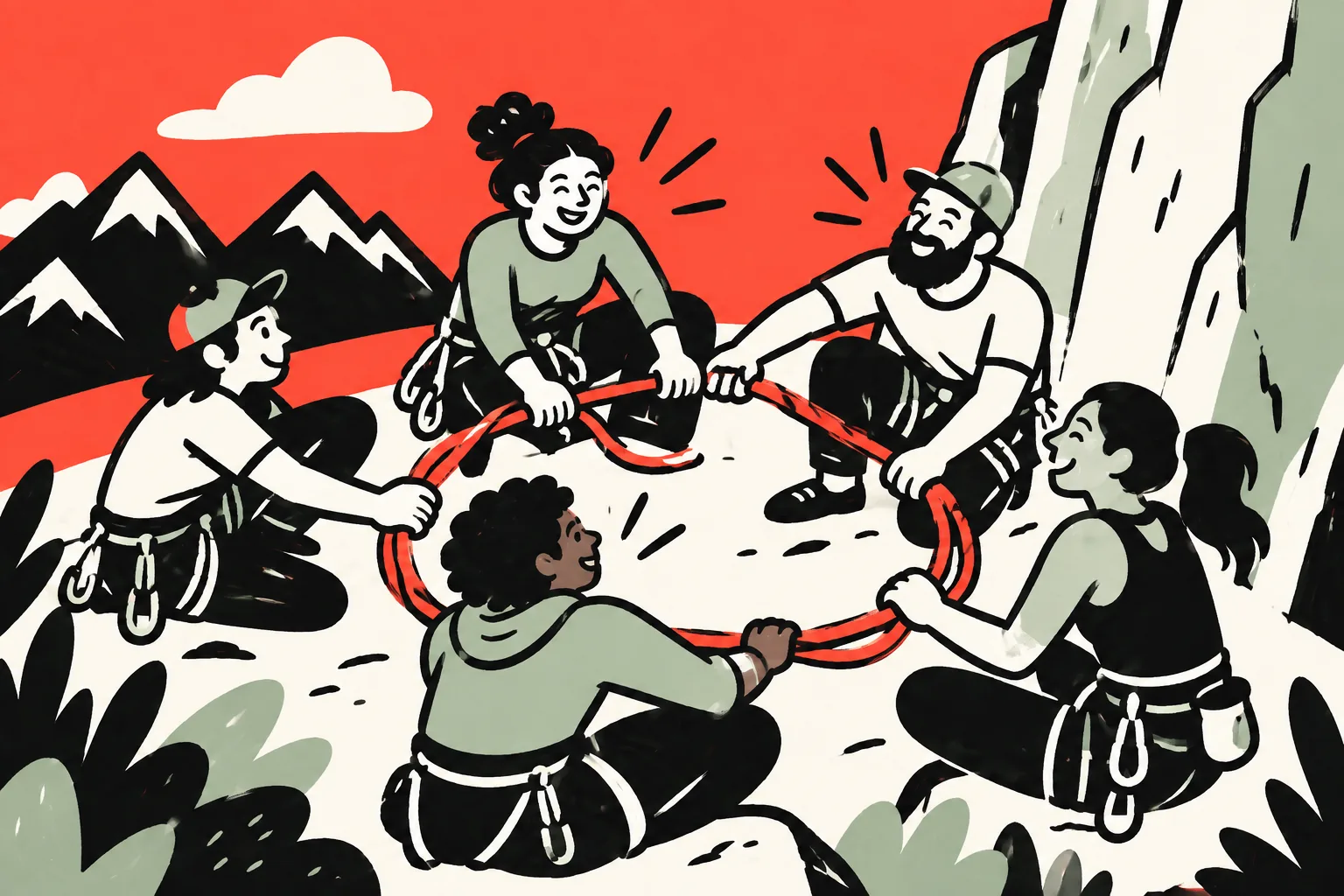
An outdoor community exists when people recognize belonging and receive value even outside of the purchase. Events, language, learning, and relationships form rituals that are stronger than the number of followers. The brand must clarify its role, create conditions for participation and protect the quality of the experience. Communication documents and facilitates; it does not replace the community.
01
What value keeps people together?
Technique, discovery, accessibility, performance or care of the territory can create different motivations. A community that is too generic accumulates contacts but does not generate relationships.
The value must be practiced by the brand: training, outputs, tools or access. Declaring values without behaviors produces a quickly visible gap.
02
Which rituals build continuity?
Recurring appointments, shared language, and moments of giving back help people recognize a rhythm. The ritual must be simple to maintain and open to contribution.
Ambassadors and expert members can facilitate, but roles and expectations must be made clear. Participation must not become free work disguised as visibility.
03
How do you measure a community?
Return, participation, contributions and member relationships better describe health than audience growth alone.
The numbers must be read together with the quality and safety of the meetings. A smaller community can create more value and reputation than a passive audience.
In practice
- 01Define reciprocal value.
- 02Build maintainable rituals.
- 03Measuring return and participation.
Connected reading
Continue with
Outdoor and adventure · Social media hospitality: content strategy · Outdoor photos and videos: field production · Outdoor branding and experiences · /climbers
Sources and further reading
Verifiable references
From reading to action