
Short answer
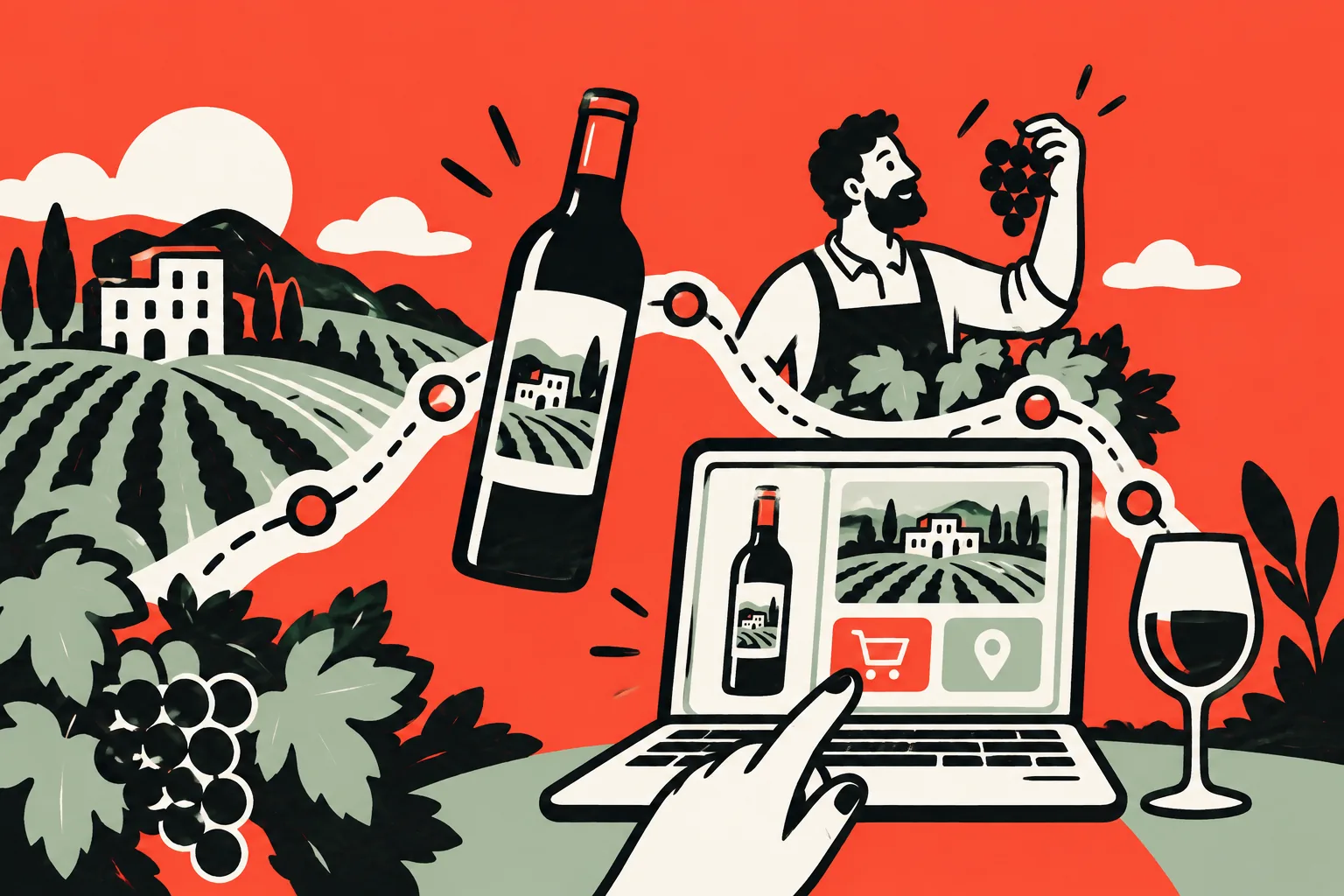
A winery's website must help different audiences orient themselves without separating the brand into incompatible worlds. Those looking for a wine, a visit, technical information or a commercial relationship start from different questions. A clear architecture connects products, territory and people, makes vintages and availability legible and leads to purchase or contact. The story creates value when it offers evidence and information, not when it hides the wine behind abstract language.
01
How is the offer organised?
Wine families must reflect an understandable logic: territory, method, occasion or range. Cards and filters only help if they use criteria that are useful to the public.
Every wine needs accessible technical information, but also a context that explains the difference. Vintage, vineyard and pairing must support the choice without becoming an exercise in quantity.
02
What role do territory and people have?
Landscape and history gain strength when linked to productive decisions. Original photographs and attributed texts show responsibility and make the brand verifiable.
People don't just have to appear on your company page. Voices and skills can enter the files, visits and insights, creating continuity between product and organization.
03
How do sales and hospitality coexist?
E-commerce and visit booking can share accounts and data, but must maintain simple paths. Not every visitor wants to buy right away; every action must have a context.
Speed, logistics, availability and shipping policies impact trust. Visual quality does not compensate for incomplete business information.
In practice
- 01Organize the wines with understandable criteria.
- 02Connecting storytelling and productive decisions.
- 03Make sale, visit and contact clear.
Connected reading
Continue with
Websites and digital products · Wine tourism and visit to the cellar · Local SEO tourism and hospitality · Credible territorial storytelling
Sources and further reading
Verifiable references
From reading to action