
Short answer
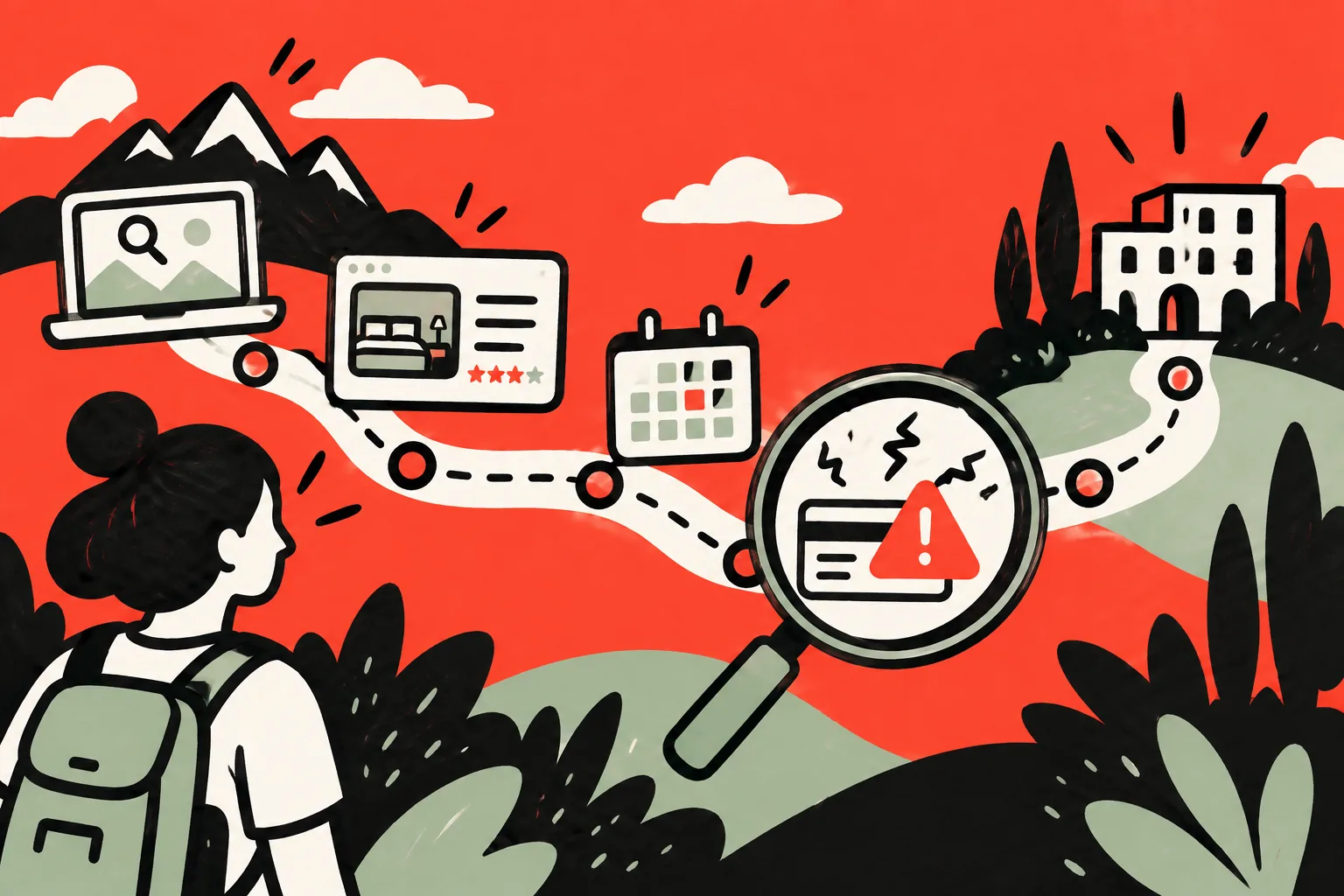
Hotel analytics are useful when reconstructing the path from discovery to booking. Sessions and views do not explain whether a person found the room, checked the conditions or abandoned it in the booking engine. You need a measurement plan with shared events, sources and phases. The data must be sufficient to make decisions and respect consent and privacy, avoiding collections without a specific request.
01
Which phases deserve an event?
Qualified entry, room visit, availability check, rate choice and confirmation describe observable steps. The names of the events must remain stable between the site and booking.
Microinteractions and scrolls only make sense when they respond to a hypothesis. Measuring everything increases noise and makes it harder to recognize what matters.
02
How do you connect sources and results?
Channels, campaigns and organic search must maintain information along the way. Switches between domains or tools can break attribution right at the crucial point.
The comparison between periods considers availability, price and demand. A conversion change without context can lead to incorrect site changes.
03
How does it become a decision?
A useful report starts with a question, shows the signal and offers a test. Dashboards full of metrics without accountability produce passive observation.
The team can work in a short cycle: identify a friction, change an element, check consequences and document what they have learned.
In practice
- 01Define the booking phases.
- 02Protect continuity between instruments.
- 03Link each report to a hypothesis.
Connected reading
Continue with
Growth and distribution · SEO for hotels and direct booking · Hotel landing page: structure and conversion · Hotel service design and guest journey
Sources and further reading
Verifiable references
From reading to action